Services
SOCIAL PLATFORM
Client
Ola Chat
Location
Singapore
Year
2021-2025
(1)
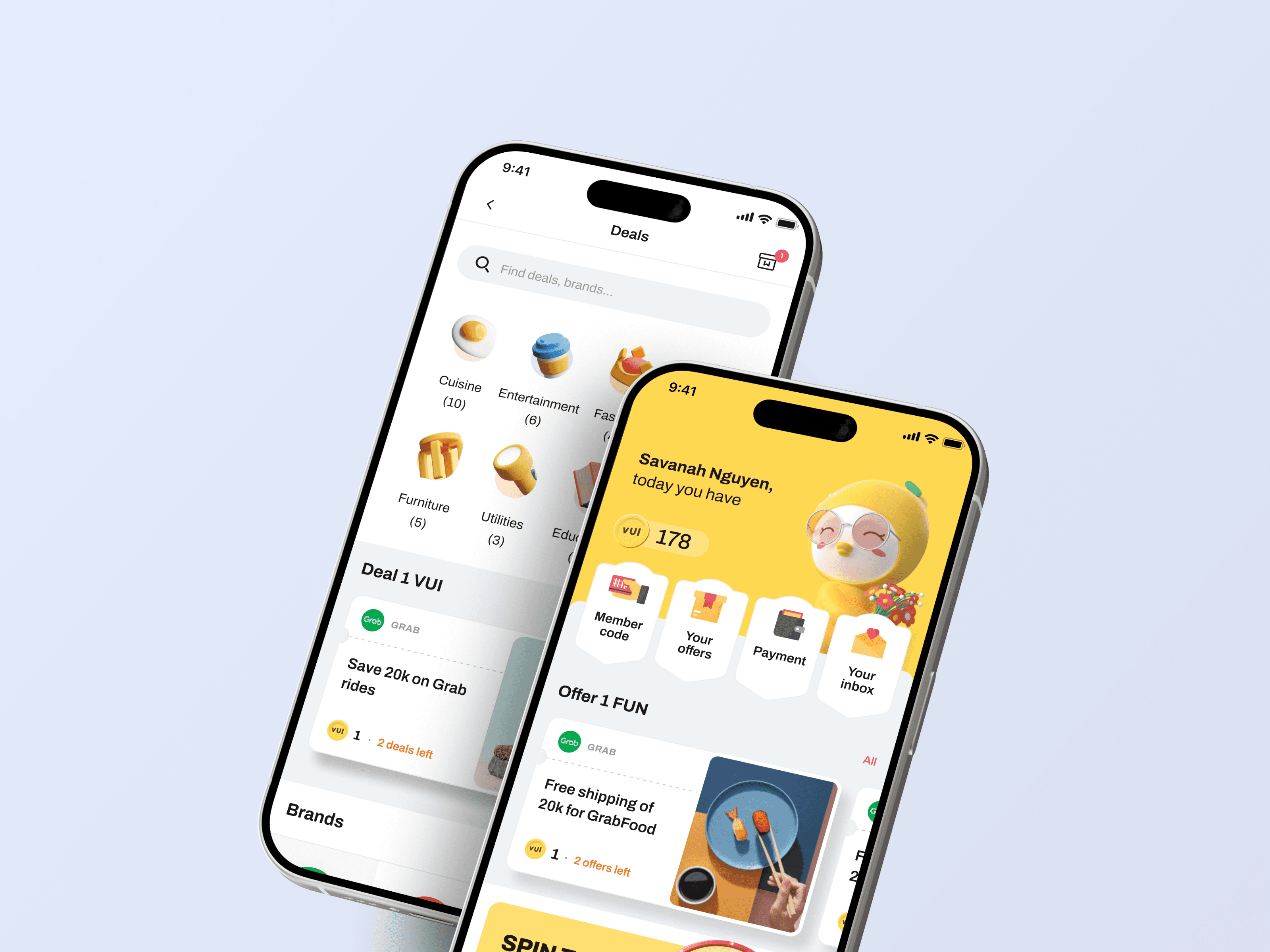
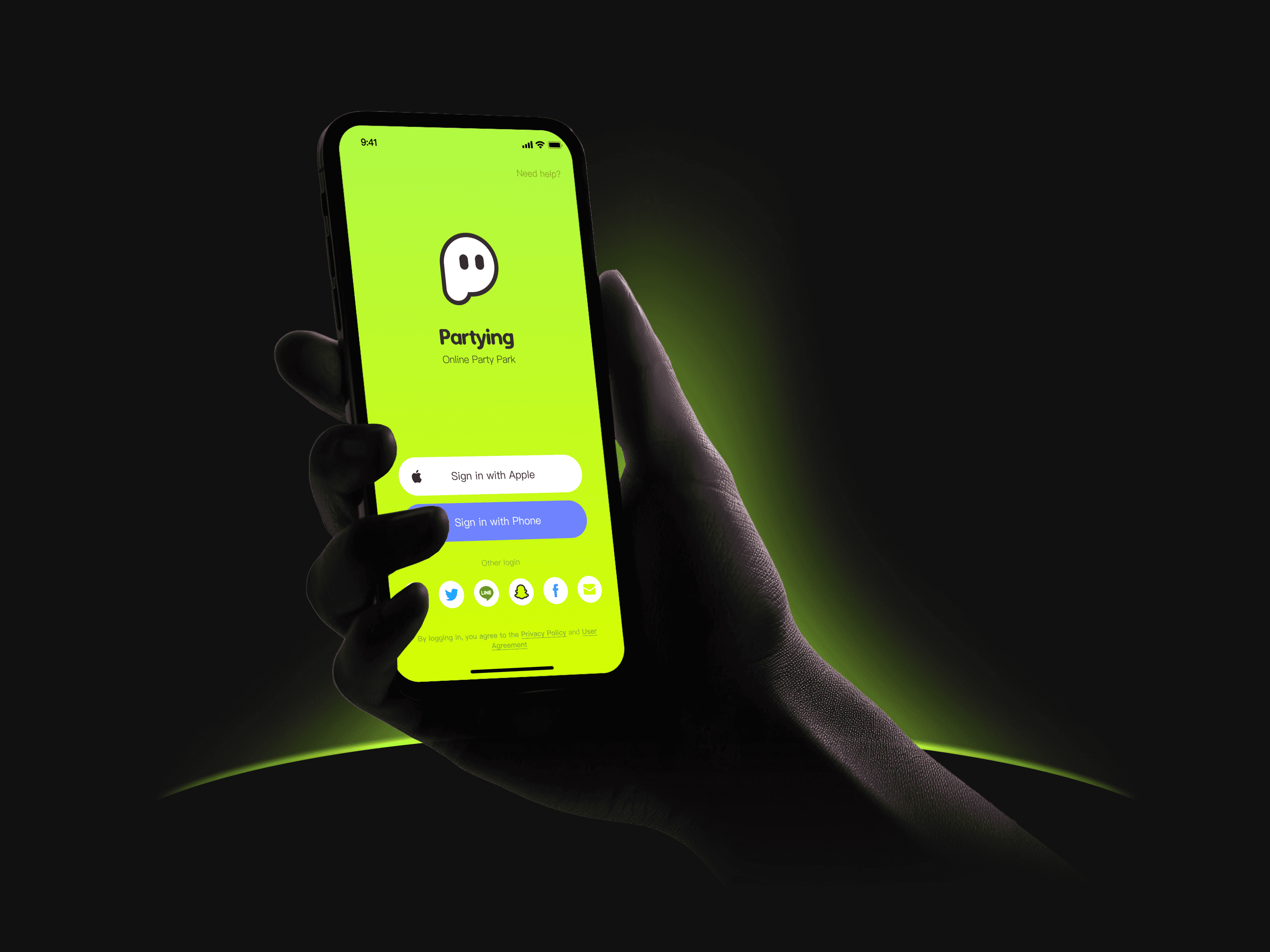
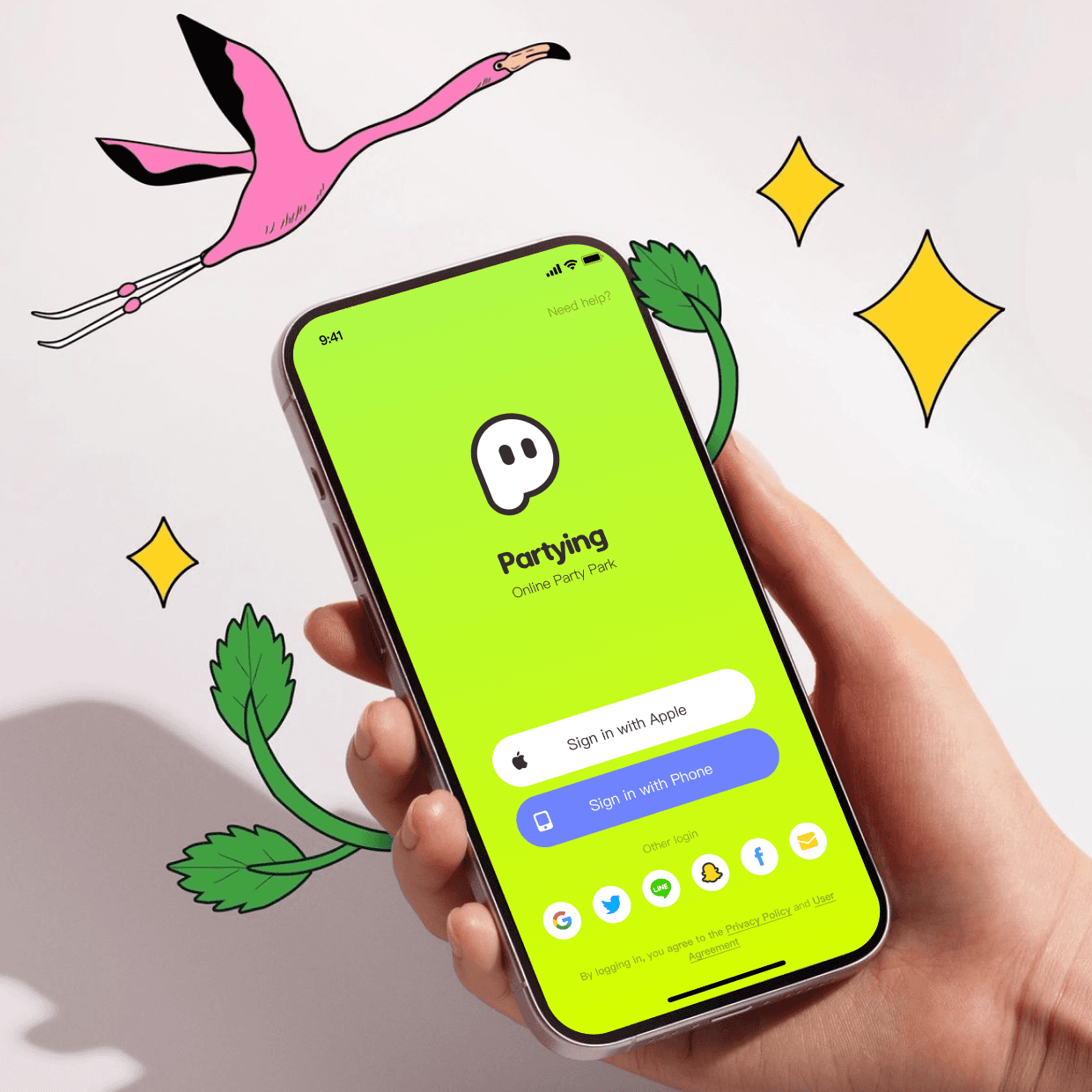
Ola Chat is a Singapore-based social entertainment company with 2,000+ staff across 22 global offices. When I joined in June 2021 as Senior Product Designer, the company was scaling two distinct products simultaneously — Partying, a voice chat and gaming platform, and Veeka, a multi-video social space — across APAC and the Middle East.
Both products shared the same engineering organization but had no shared design language. My mandate was to change that: to build the infrastructure that would let a lean design team ship consistently across two products, two markets, and two audience profiles — without rebuilding from scratch every sprint.
In short: to make design a multiplier, not a bottleneck.
(2)
Scaling two social platforms in parallel exposed three compounding problems:
UI/UX Fragmentation. The same UI pattern — a button, an avatar stack, a chat bubble — existed in four to six variations across Partying and Veeka. Each variation differed slightly in spacing, color, and interaction behavior. Inconsistency was invisible from any single designer's view, but visible to every user who moved between products.
Scalability Bottleneck. Every new feature required components to be rebuilt from scratch. Engineers spent significant time interpreting ambiguous specs. As the product team accelerated, design debt accumulated in the UI layer faster than it could be resolved. Velocity and quality were pulling in opposite directions.
Handover Friction. Prototypes communicated layout but not behavior. Motion timing, micro-interactions, and state transitions were described in annotation comments — or not at all. The gap between design intent and shipped product widened with each release cycle.
(3)
I approached the problem as infrastructure work, not a design project — building systems that would serve designers, engineers, and product managers equally.
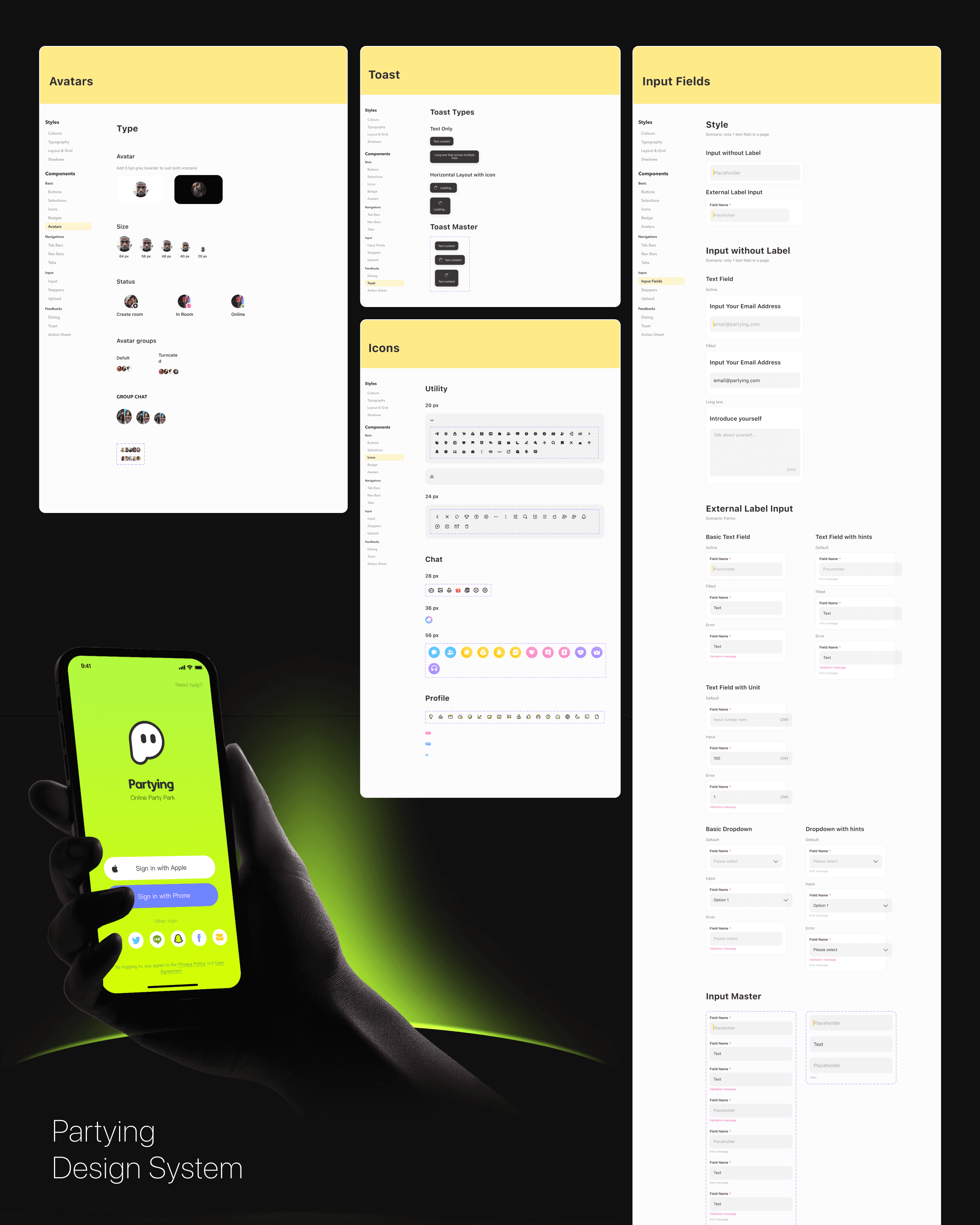
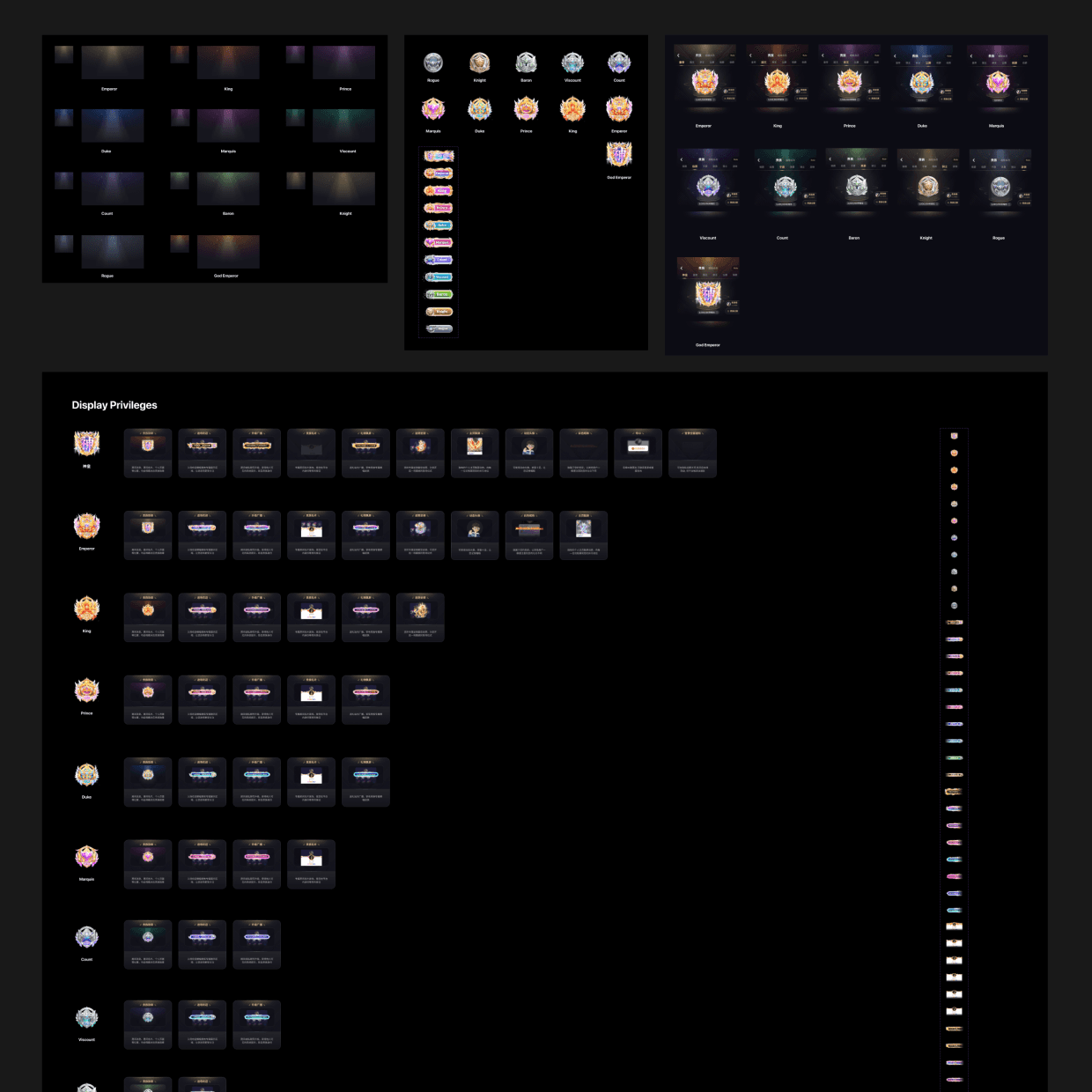
Design System as Single Source of Truth. I architected a component library in Figma covering typography, color tokens, spacing scale, and 60+ UI components. Each component was documented with state variations (default, hover, active, disabled, error) and responsive behavior. Auto layout and shared variables enabled one-click theme switching between Partying and Veeka.
Interactive Handover Protocol. I replaced static redlines with interactive prototypes that demonstrated exact timing, easing curves, and conditional logic. Engineers received motion specs as code-ready values — duration: 300ms, easing: cubic-bezier(0.16, 1, 0.3, 1) — eliminating ambiguity at the handover boundary.
Localization Architecture. Designing for APAC and the Middle East simultaneously required RTL-aware layout rules built directly into component structure. Arabic strings run 30–40% longer than English — the system handled this through token-based containers, making localization a property to configure, not a redesign to commission.
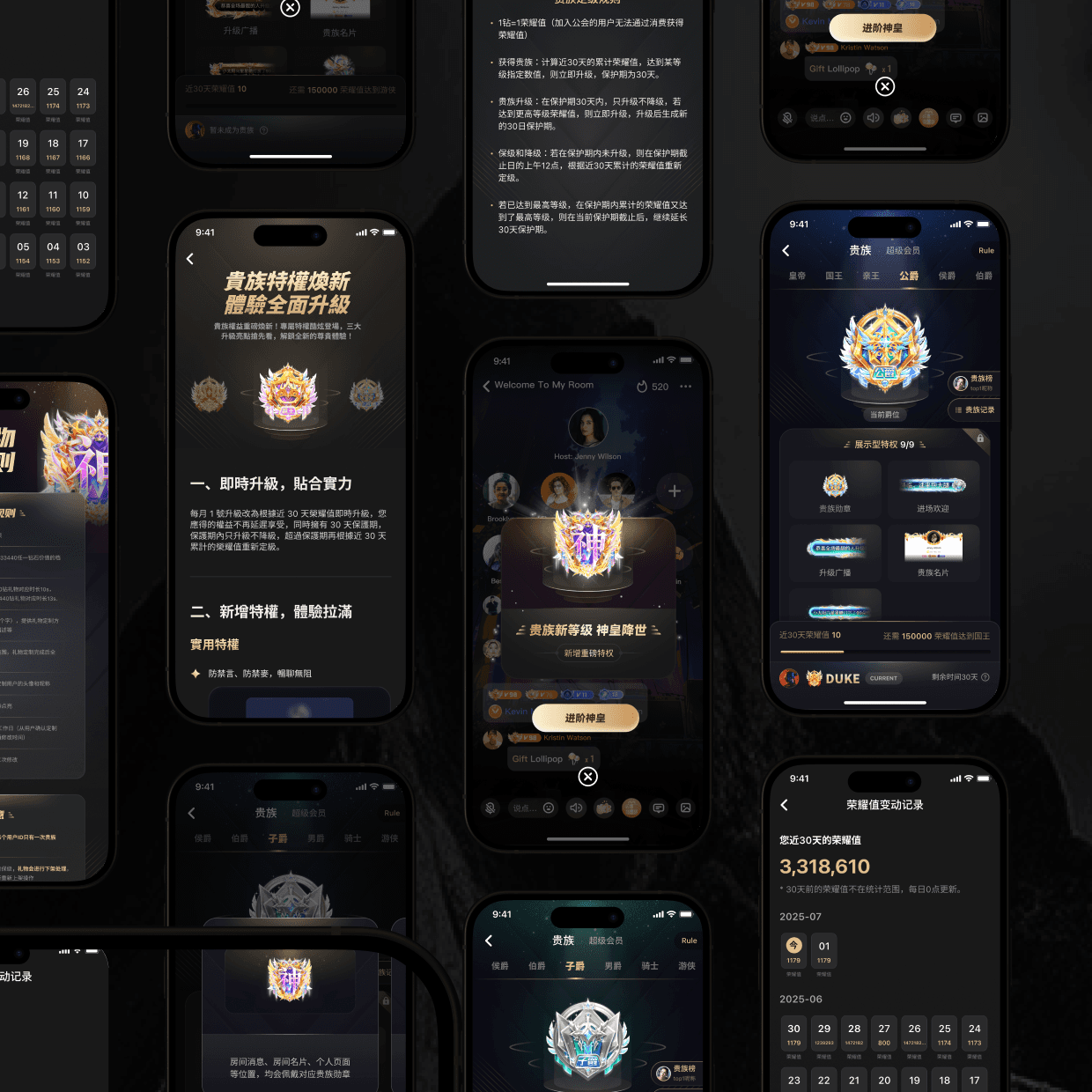
Motion Language. I defined a motion system aligned with the brand's social entertainment identity: expressive on key moments (entry animations, reward states), restrained on utility flows (navigation, forms). Delivered as an After Effects reference library and a Figma prototype kit — usable by any team member without additional explanation.
(4)
The design system became the foundation that let a small team operate at the scale of a much larger one.
Partying surpassed 10 million downloads. Veeka — launched in January 2022, midway through my tenure — reached 14 million installs with a 4.3-star rating across 38,000 reviews, and continues to grow at 210,000 downloads per month. Together, both products account for 24M+ combined installs across APAC and the Middle East.
Beyond the numbers: localization became a configuration task rather than a redesign effort. Handover friction dropped as interactive specs replaced static redlines. The design system itself became the connective tissue between two products that once shared nothing — the same tokens, the same components, the same motion language, shipped to different audiences in different languages on different platforms.
This is what design infrastructure looks like when it works.